
Winter hiking in Alicante reveals a province that is far more mountainous than its beach-holiday image suggests. From December to February, walking temperatures are often more comfortable, trails feel quieter and Mediterranean light transforms the coastal scenery. Winter does not remove every risk, however. Wind, rain, occasional ice at altitude and early sunsets make careful planning essential.
This selection includes easy walks, intermediate mountain routes and serious full-day challenges. Distances and timings vary with the exact starting point, pace and diversions. Always check the natural park’s current information, the forecast and any temporary restrictions before setting out.
1. Albir Lighthouse, the easy Serra Gelada walk
The route to Albir Lighthouse is one of the best introductions to coastal walking in Alicante. It begins at the natural park entrance in l’Albir and follows a comfortable track to the lighthouse, overlooking Altea Bay, cliffs and features connected with the area’s mining and defensive history. It is a low-difficulty out-and-back route that suits families accustomed to walking.
In winter it provides excellent sea views without the major climbs of the full Serra Gelada traverse. Take a windproof layer and stay away from unprotected cliff edges.
2. Cabo de las Huertas from Alicante
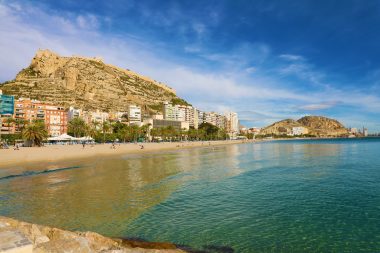
Alicante’s official Cabo de las Huertas trail covers approximately 4.35 kilometres between Albufereta and the lighthouse area, passing Almadraba, Cala de los Judíos, Cala Cantalar and Cala Palmera. The tourism authority grades it easy, although rocky and uneven sections require footwear with reliable grip.
It is an excellent choice for a shorter day and can be reached by public transport. The route combines geology, small coves, salt-tolerant plants and coastal birdlife. Avoid sections close to the water during rough seas.
3. Menejador in Font Roja Natural Park
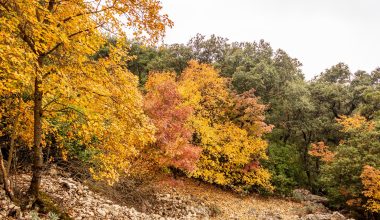
Carrascal de la Font Roja Natural Park, near Alcoy, shows a greener and more forested side of Alicante. The ascent towards Menejador passes holm oak woodland, historic snow wells and inland viewpoints. It is an intermediate mountain route whose difficulty increases significantly in cold, fog or wet conditions.
Check access conditions and park notices in winter. Carry an extra insulating layer: temperatures can be much lower than on the coast and shaded ground stays damp for longer.
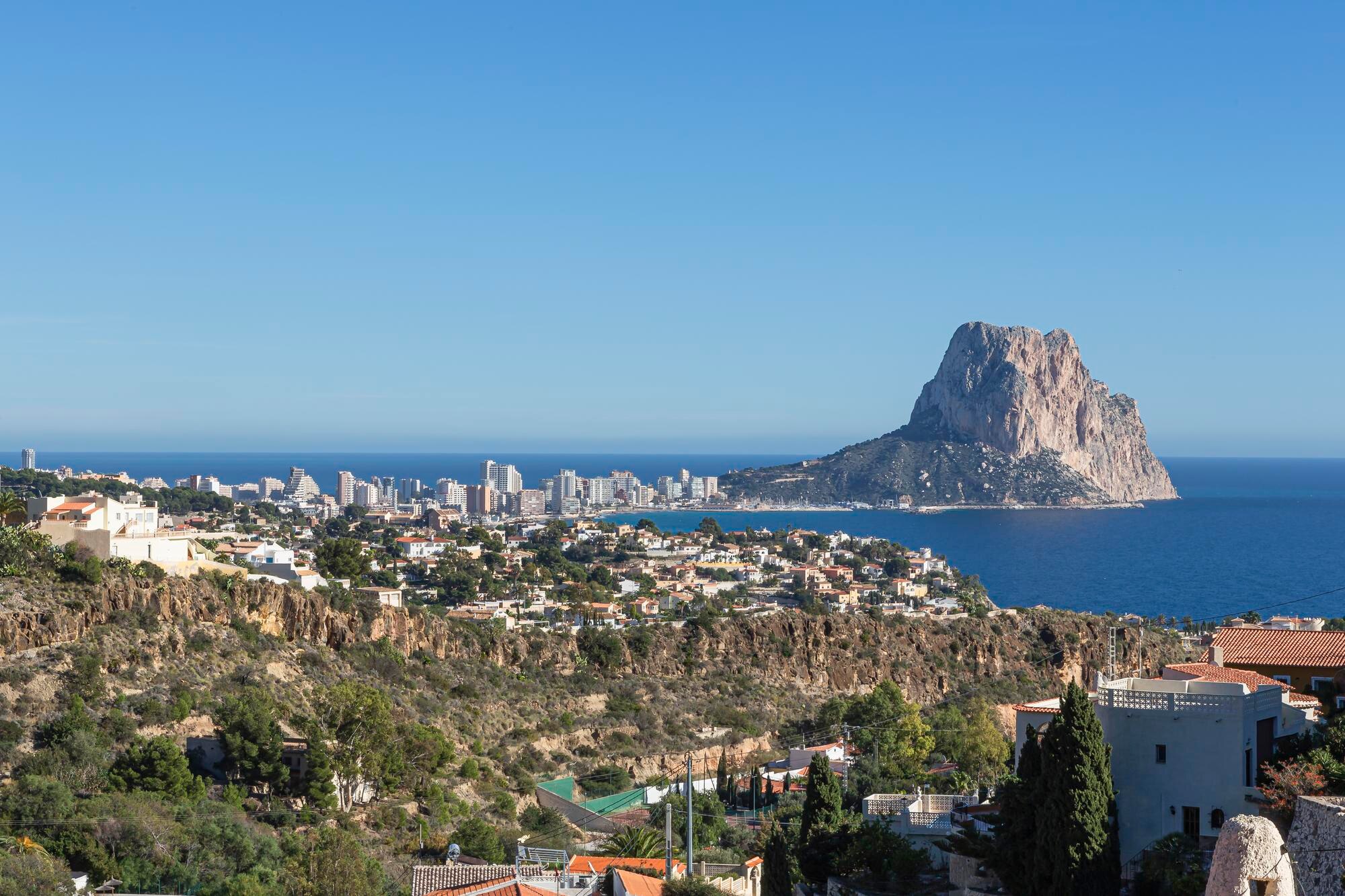
4. Peñón de Ifach: visitor centre, viewpoints and summit
The Red Route in Penyal d’Ifac Natural Park climbs from Calpe towards the tunnel and, for experienced walkers in suitable conditions, continues into the upper section. Access is regulated and requires an advance booking through the Valencian government’s official system. Each booking is personal.
Do not treat the entire climb as a family walk. Beyond the tunnel the limestone is polished, uneven and exposed. The park’s own advice warns against continuing with children or in rain and fog. Less experienced visitors can enjoy the lower route and viewpoints without taking unnecessary risks.
5. The circular Forat de Bèrnia route
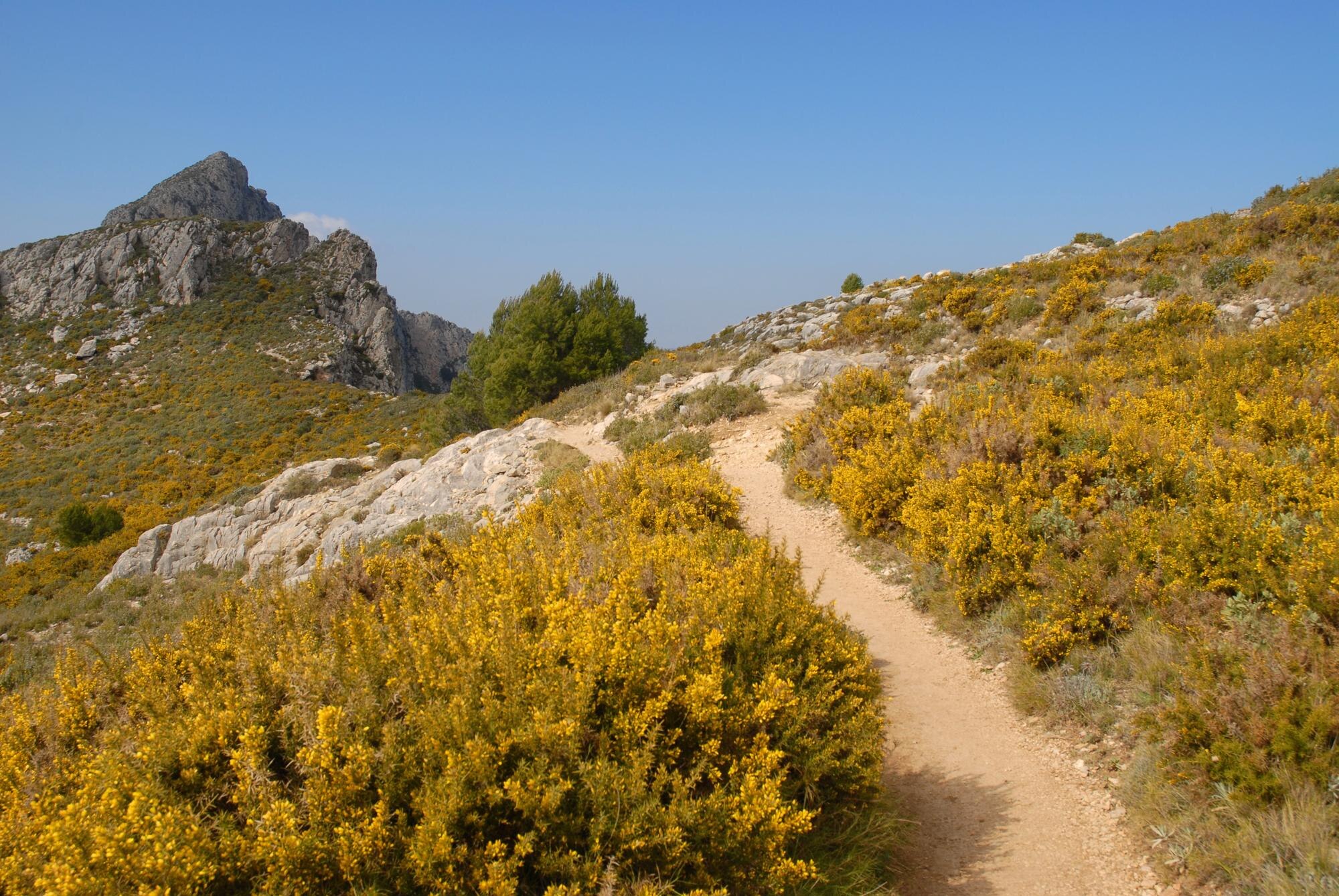
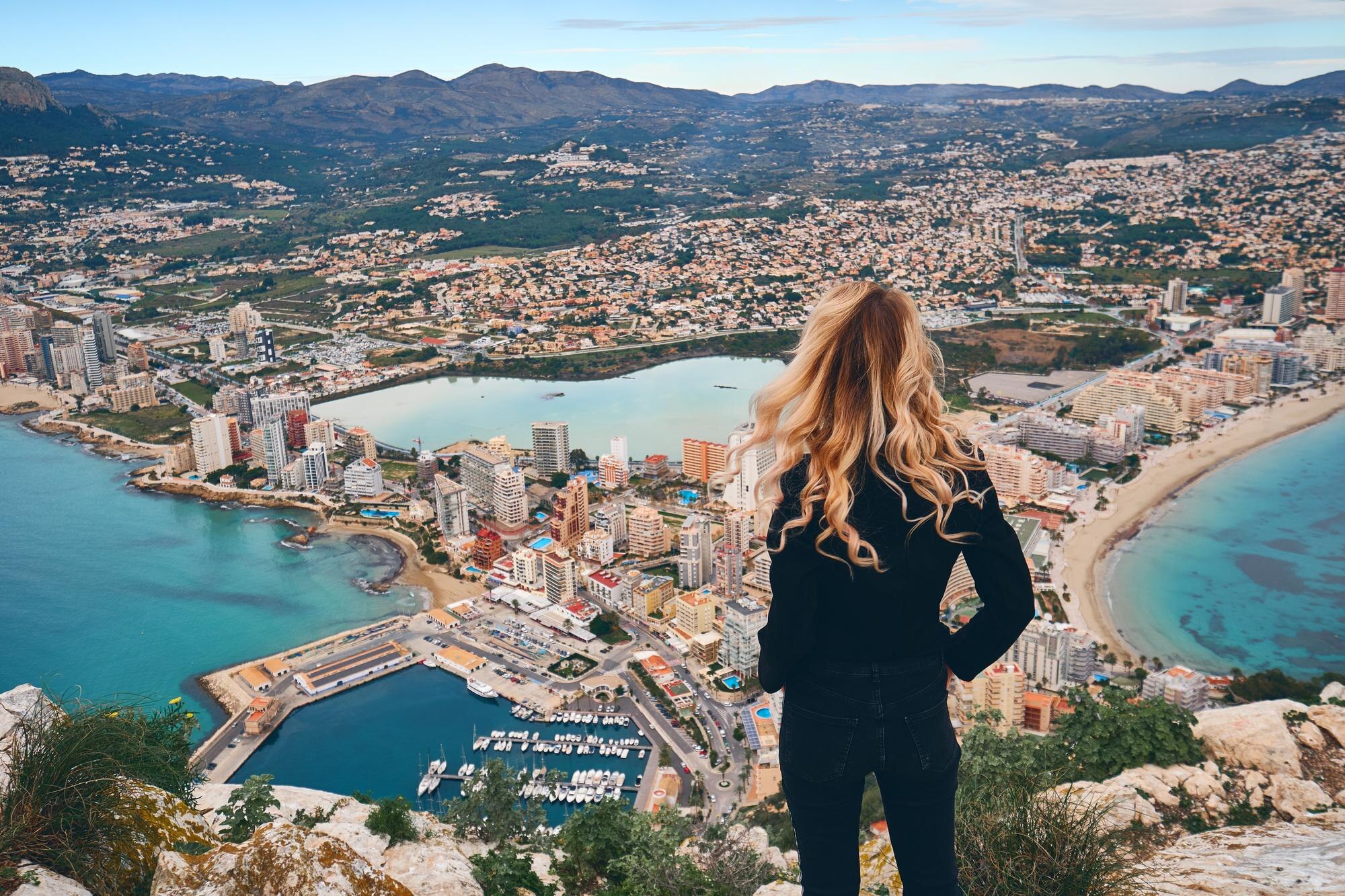
Serra de Bèrnia divides the Marina Alta and Marina Baixa districts. Its best-known circular route starts at Casas de Bèrnia, passes Font de Bèrnia and crosses the Forat, a natural tunnel that opens onto a magnificent view of Altea, Benidorm and the Mediterranean. The ruined Fort de Bèrnia provides another memorable stop.
This is a mountain route rather than a casual walk. Expect stony terrain, ascent and short sections where you may need to crouch or use your hands. Avoid it in fog, heavy rain or strong wind and download the route before leaving because reception can be patchy.
6. Montgó from Dénia or Jesús Pobre
Montgó dominates the Marina Alta and has several official itineraries. Summit routes are demanding because of ascent, sharp limestone and exposure. Winter makes them more manageable than the hottest months, but wet rock or strong wind can make a summit attempt a poor decision.
Choose an itinerary that matches your experience and never improvise shortcuts. Lower sectors of the park and the Cap de Sant Antoni area provide gentler alternatives. Access to Cova Tallada is regulated during certain periods, so check whether a booking is required.
7. Barranc de l’Infern in Vall de Laguar
Known for its many stone steps, this circular route follows ravines and historic paths between the villages of Vall de Laguar. It is long and involves substantial ascent and descent, making it suitable only for fit walkers with full-day mountain experience.
Winter reduces the danger of extreme heat but not the physical effort. Start early, calculate daylight carefully, carry enough water and food, and stay away when heavy rain is forecast. Ravines demand particular caution during unsettled weather.
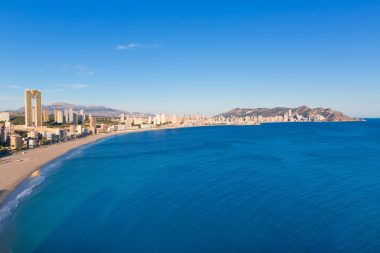
8. Serra Gelada traverse between Benidorm and l’Albir
This should not be confused with the lighthouse walk. The ridge traverse includes repeated steep climbs and descents close to major cliffs. It requires fitness, navigation skills and a head for heights. Views across Benidorm, Altea Bay and the Mediterranean are exceptional, but it is a serious outing.
Arrange transport between the two ends, leave plenty of daylight and abandon the plan in strong winds. Combine the trip with our guide to the best things to do in Benidorm.
A guided alternative: Callosa de Segura via ferrata
If you want a vertical activity with technical equipment and professional supervision, the family section of the Callosa de Segura via ferrata combines metal rungs, safety cables and suspension bridges. It is not an ordinary hiking trail or an independent activity: you need to book, follow the guide and meet the operator’s fitness and safety requirements.
Choosing a trail for your level
- Beginner: Albir Lighthouse and Cabo de las Huertas.
- Intermediate: Menejador in Font Roja and appropriate sections of Serra de Bèrnia.
- Advanced: the Ifach summit, Montgó, Barranc de l’Infern and Serra Gelada traverse.
These levels are only a guide. Weather, ground conditions and personal experience can completely alter the real difficulty.
What to pack for winter hiking
- Walking boots or shoes with reliable grip.
- Layers, a windproof jacket and waterproof protection.
- Enough water and food; do not assume springs will be flowing.
- Downloaded mapping, a charged phone and a power bank on longer routes.
- Sun protection, sunglasses and a hat even in winter.
- A head torch, emergency blanket and small first-aid kit for demanding outings.
Safety and planning
Tell someone your route and expected return time. Check natural park notices, fire risk, wind and rainfall. Do not enter ravines when rain is forecast, avoid exposed high routes in fog and turn around before a manageable situation becomes dangerous. Call 112 in an emergency.
For villages, food and cultural ideas to combine with these walks, read our wider guide to things to do in Alicante in winter.
Frequently asked questions
What is the best easy winter hike in Alicante?
Albir Lighthouse and Cabo de las Huertas are accessible, scenic options. You should still check wind, surface conditions and the forecast.
Do you need to book Peñón de Ifach?
Yes. Access to the Red Route is regulated and requires an individual booking through the official Valencian government system. Check the current conditions before travelling.
Can it snow in Alicante’s mountains?
Snow and ice can occur at higher elevations and inland during cold spells. Never assume conditions on Aitana, Font Roja or other ranges match those by the sea.
Is hiking safe after heavy rain?
Not in ravines or on exposed rocky routes. Surfaces may be slippery and watercourses can respond quickly. Choose a safe urban or coastal walk and wait for conditions to improve.