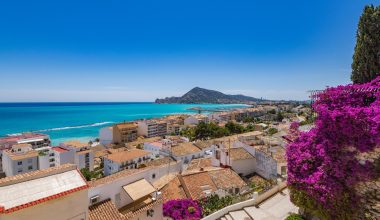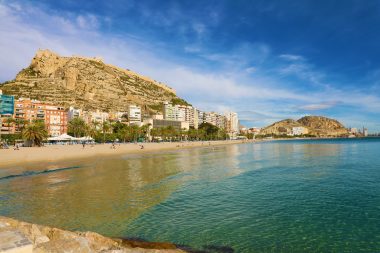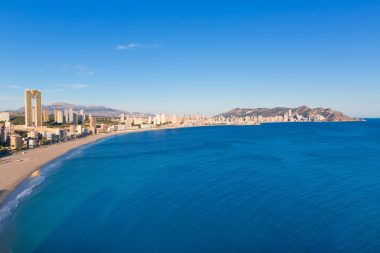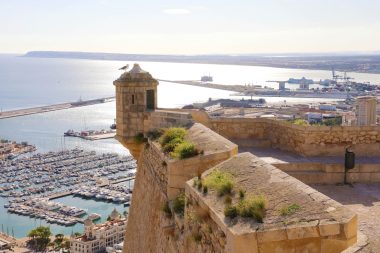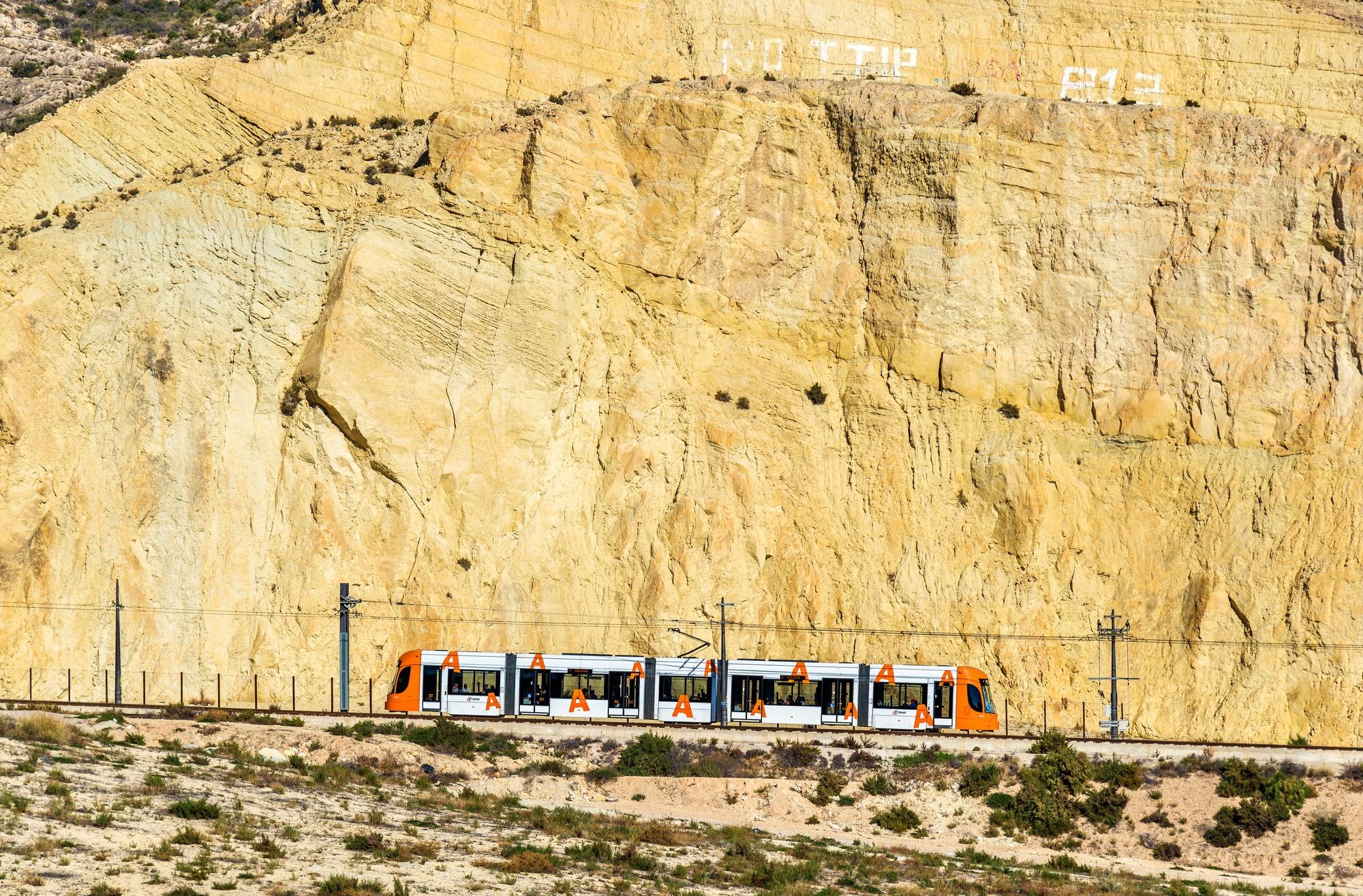

Exploring Alicante and the Costa Blanca without a car is entirely realistic if you choose the right base and combine the TRAM, intercity buses and walking. Alicante city, Playa de San Juan, El Campello, Villajoyosa, Benidorm, Altea, Calpe and Dénia are linked by public transport, although not every journey is direct or equally frequent.
This guide explains how to plan the trip and which destinations are easiest. Timetables, fares and service notices change, so check official information on the day you travel.
Getting from Alicante Airport to the city
Alicante-Elche Miguel Hernández Airport does not currently have a TRAM station at the terminal. The usual link is the C-6 airport bus, which operates every day of the year and connects with the TRAM in central Alicante at stops including Alfonso X El Sabio and Luceros.
Direct airport coaches also serve destinations such as Benidorm, Calpe, Dénia, Jávea, Torrevieja and Santa Pola. If you are staying outside Alicante, compare that direct service with travelling into the city first.
How the Alicante TRAM works
The network combines urban tram sections with interurban rail. Services leave central Alicante for the beaches, El Campello and Benidorm. To continue north towards Altea, Calpe or Dénia, passengers will usually change in Benidorm.
- L1: the faster Alicante–Benidorm link, with useful coastal stops depending on the service.
- L3: connects Alicante with El Campello and several metropolitan beaches.
- L4: useful for Playa de San Juan and nearby areas.
- L9: continues from Benidorm to Altea, Calpe and Dénia.
Never assume the final departure provides every connection. Check complete timetables, transfers and any replacement buses on the official TRAM d’Alacant website or app.
1. Alicante city: the best car-free base
Alicante offers the strongest transport links and many walkable attractions: the Explanada, Santa Cruz, Central Market, Postiguet beach and Santa Bárbara Castle. Luceros, Mercado and MARQ-Castillo are useful TRAM stations.
The historic centre and seafront are compact enough to explore on foot before adding day trips along the coast.
2. Playa de San Juan
Playa de San Juan is an easy outing from Alicante. The TRAM serves different parts of the long beach, allowing visitors to combine the seafront, swimming and restaurants without parking. Choose the stop that best matches the exact area you want.
3. El Campello
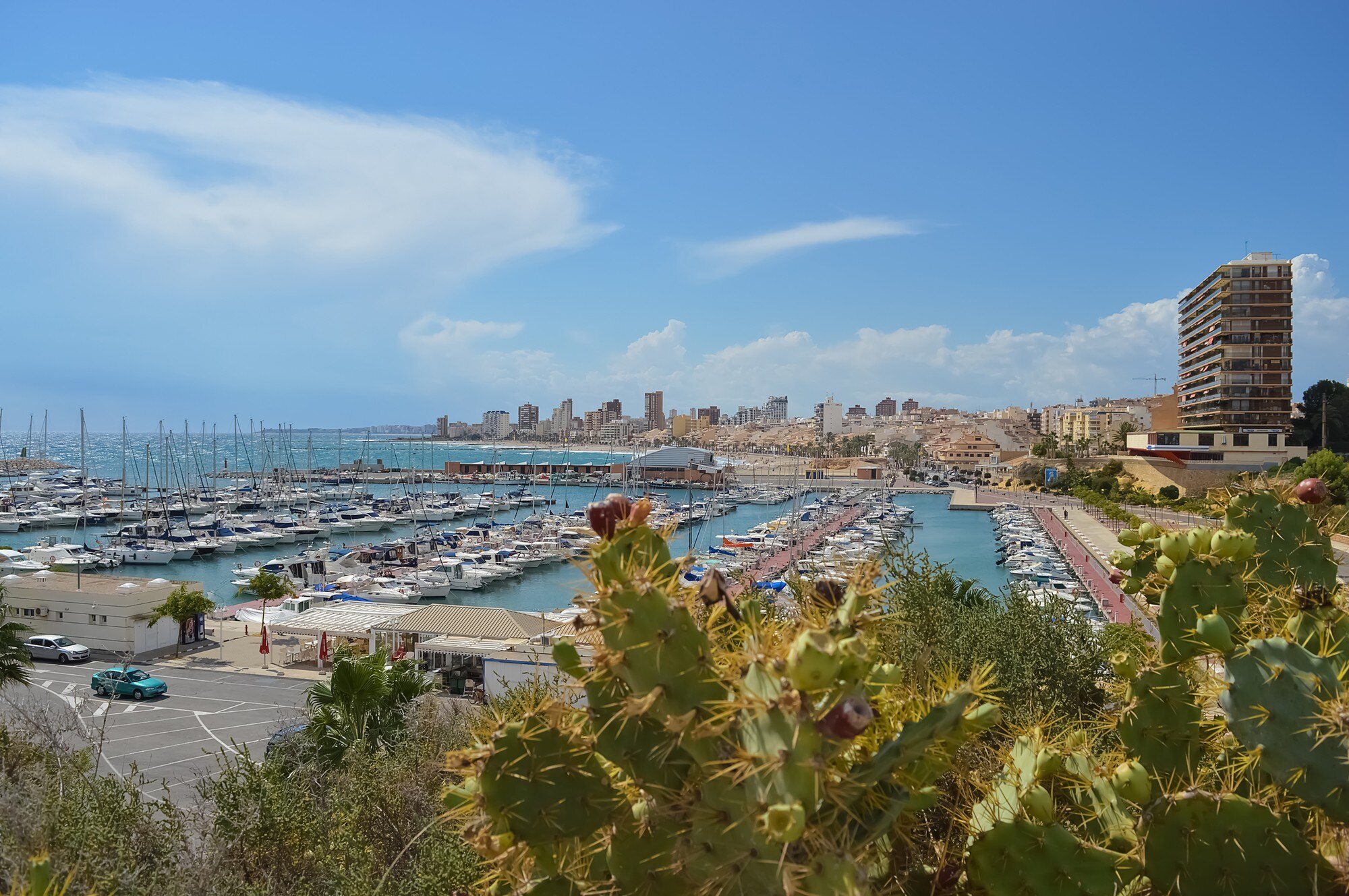
El Campello works well for half a day or a full day. From the station you can walk to the promenade, Carrer la Mar beach, harbour and the Illeta dels Banyets area.
4. Villajoyosa
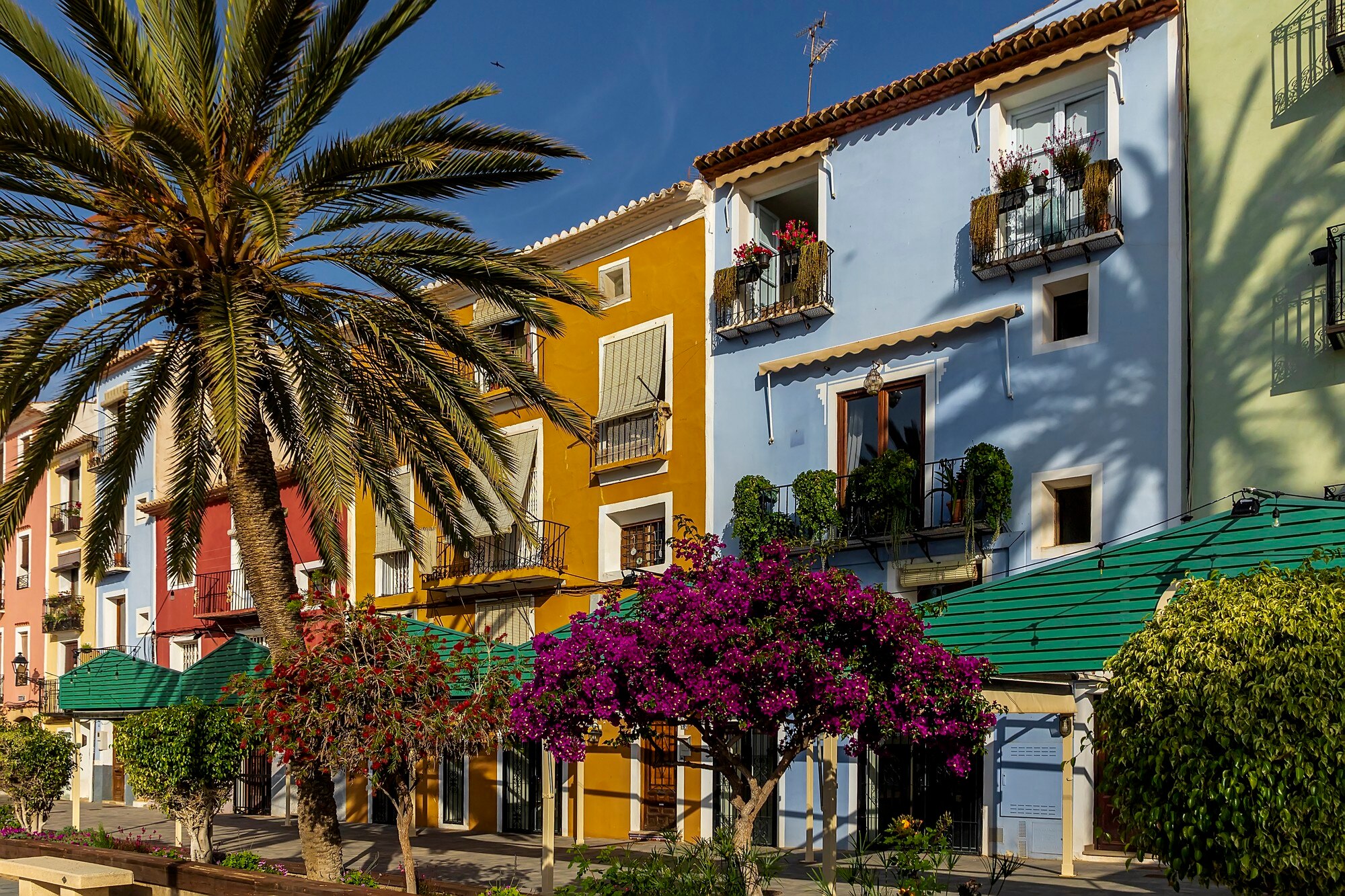
Villajoyosa combines an urban beach, colourful houses and a chocolate-making tradition. Check which station is most convenient and allow for the walk to the waterfront. The centre is compact and rewarding on foot.
5. Benidorm
L1 links Alicante and Benidorm. From the station, walk or take a local bus to the old town, Balcón del Mediterráneo and Levante or Poniente beach. Pay attention to the L9 connection when travelling onwards.
Use our guide to things to do in Benidorm to plan the day.
6. Altea
Altea station is in the lower town. The promenade is nearby, while the old town requires a steep walk uphill. It is one of the best car-free trips because historic streets, viewpoints and the coast can be combined on foot.
See our complete guide to things to do in Altea.
7. Calpe
Calpe station is not beside the historic centre or beach. An efficient visit may require a local bus or taxi. Plan access to the Peñón de Ifach, harbour and beaches separately and leave enough time for the return.
8. Dénia
Dénia is at the northern end of the network and takes longer from Alicante, normally with a change in Benidorm. It is more comfortable as a base or as an early-start day trip. The castle, centre and harbour are walkable on arrival.
Places that require a bus
The TRAM primarily covers the northern coastal corridor. Santa Pola, Torrevieja, Guardamar, Elche, Guadalest and inland villages require intercity buses, organised trips or specific combinations. Avoid squeezing several poorly connected towns into one day.
Tickets and practical advice
- Check fare zones and the correct ticket before validating.
- Keep the ticket until the journey is complete and validate whenever required.
- Review engineering works, disruptions and replacement buses.
- Save the official map and screenshots of return services.
- Do not plan around the final connection without a buffer.
- In summer, allow for crowds and carry water for walking sections.
- When travelling with luggage, check station and accommodation accessibility.
A five-day car-free itinerary
- Day 1: Alicante old town and Postiguet beach.
- Day 2: Playa de San Juan and El Campello.
- Day 3: Villajoyosa and Benidorm.
- Day 4: Altea and its old town.
- Day 5: Calpe or a bus excursion elsewhere.
Is the Costa Blanca worth visiting without hiring a car?
Yes, particularly when the trip focuses on Alicante and the TRAM coastal corridor. You avoid traffic and parking, but isolated coves, mountain villages and multi-stop days are harder. Realistic planning makes a large part of the coast accessible without driving.