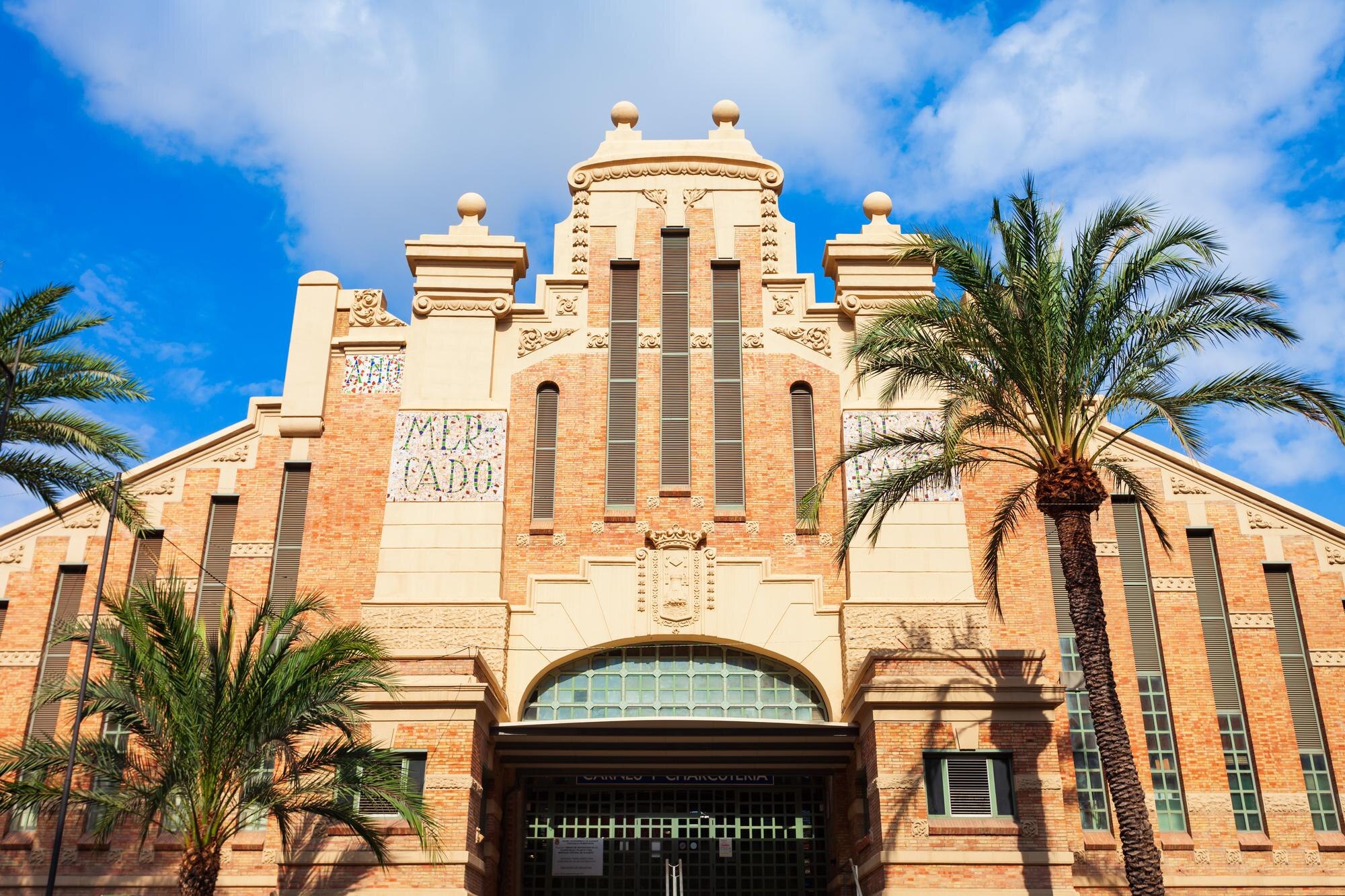

A morning at Alicante Central Market is a chance to get to know local food at the counter. Spend some time browsing, make a small purchase and finish with a tapas stop in the city centre. Allow roughly two or three hours for the walk and pauses, and arrive well before the market closes.
When to visit and how to get there
The market is at Avenida Alfonso X el Sabio, 10. The council’s opening times, checked on 23 November 2026, are 7am to 2.30pm Monday to Friday and 7am to 3pm on Saturdays and the eve of public holidays. Municipal markets generally close on Sundays and public holidays, with occasional special openings announced by the council. Check the specific notice if you are visiting around a holiday.
Arriving at around 9.30am or 10am gives you time to browse, shop and have something to eat at an easy pace. Individual stalls and bars may keep different hours. There are steps at the main entrance. Contact the market in advance if you need an accessible entrance. For TRAM travel, Mercado station is listed on the tourist board’s market page. Check your outward and return connections in the official journey planner.
A look around both floors
Start by checking the signs and walking through the aisles before deciding what to buy. The tourist board’s food guide places most fish, seafood, fruit, vegetables, nuts, bread and sweets on the lower floor. Butchers and charcuterie stalls predominate upstairs, alongside other traders.
At a fish counter, ask what has come in that day and how it is usually prepared. At stalls selling salt-cured fish, look out for local specialities such as mojama, cured tuna, and hueva, cured roe. Let the stallholder explain the origin, cut and quantity that would suit you. Follow the queue and leave space for people doing their regular shopping.
Shopping with the seasons
Ask what arrived that morning and where it was grown. In autumn and winter, artichokes from the Vega Baja, pomegranates and Vinalopó grapes are useful starting points. The Granada Mollar de Elche PDO places its season between October and early February. The Vinalopó grape PDO’s 2026 harvest rules explain that Aledo grapes are usually picked from the second half of October to December. Check the variety, origin and what is in stock when you shop.
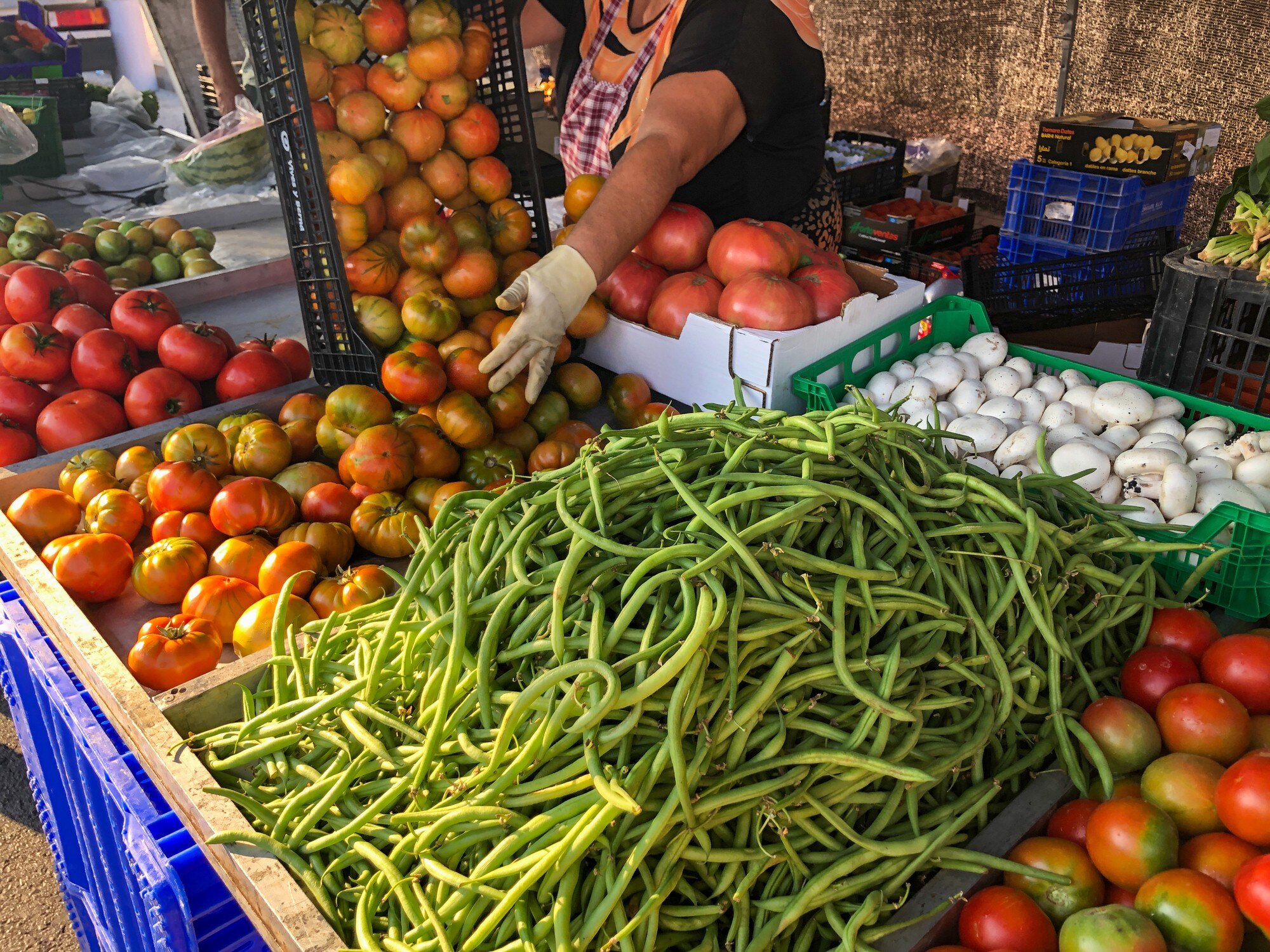
If you have a kitchen at your accommodation, buy an amount you can use that day. If you will be walking for several hours afterwards, ask which products and packaging are suitable to carry. Check whether the price is per kilo, item or portion, and specify the quantity before your order is prepared.
Taking a break for tapas
Food shopping and bar service each have their own arrangements. Before buying something to eat on the spot, ask whether the stall serves it ready to eat, where you can eat it and what the price includes. To sit down, choose a bar or terrace that is serving and check its menu. You could ask about a small plate of salt-cured fish or the day’s tapa, depending on what is offered.
Start with one order and decide afterwards whether you want another stop. That makes it easier to fit the morning to your budget and appetite. If you have a particular restaurant in mind, confirm its opening hours and table availability directly for your chosen day.
Plaza 25 de Mayo and the streets beyond
Head to the back of the market to see Plaza 25 de Mayo, also known as the flower square. Its name commemorates the 1938 bombing of the market. From here, continue towards Castaños and San Francisco streets to extend the walk and choose somewhere to eat. The official Alicante Fácil guide in English describes the connection between the square, tapas and these central streets.
To continue exploring the city’s food with a guide, see Runaway’s wine and tapas tasting walk in Alicante. The listing describes a walking tour around the city. Check dates, conditions and the meeting point before booking.
To fit this morning into a longer stay, follow our three-day Alicante itinerary. Our guide to things to do in Alicante has more ideas for the rest of your day.