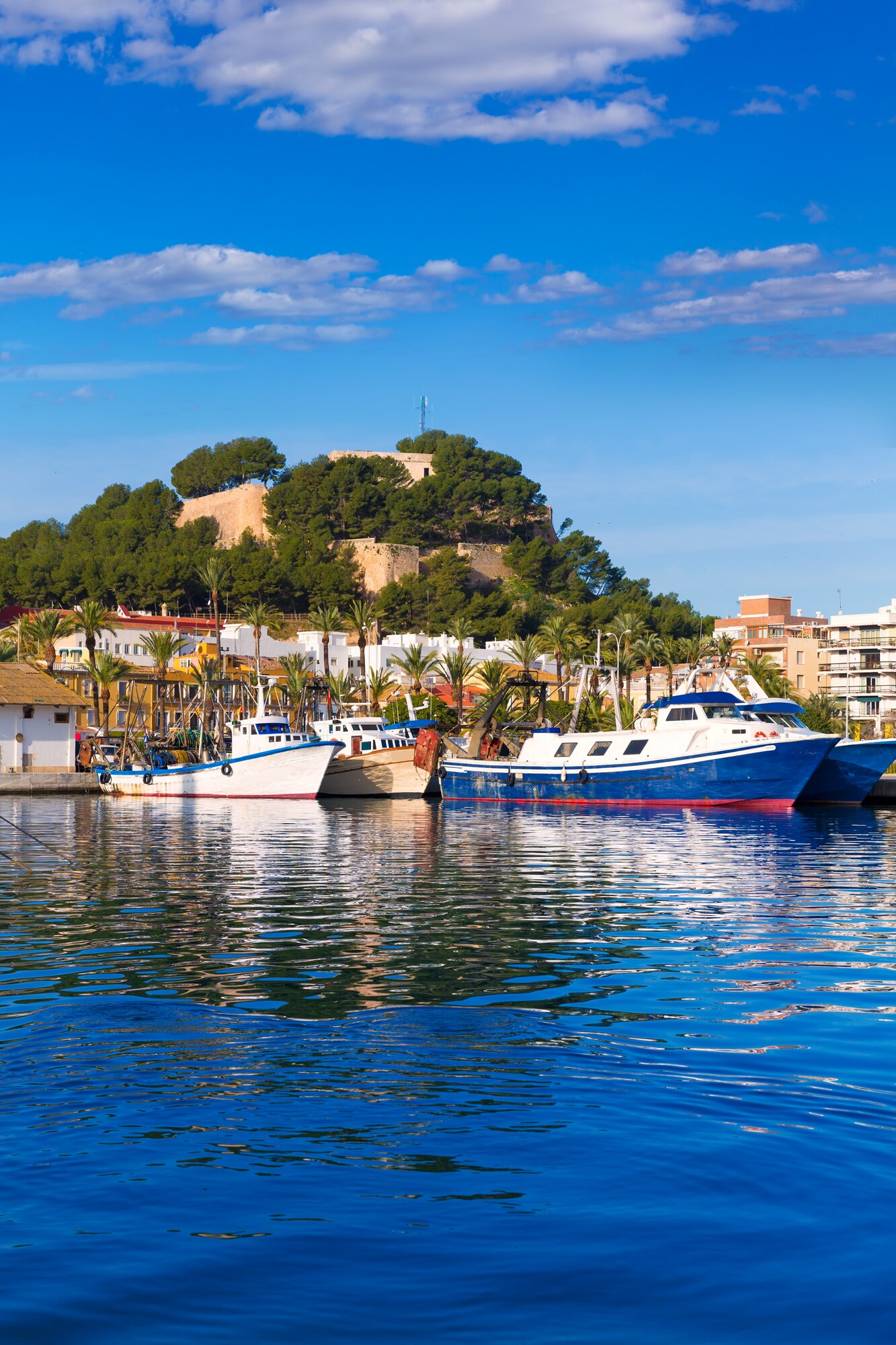

To explore Dénia in one day, start at the castle, then walk down through the town to Baix la Mar and the harbour. Seeing the town from above first helps you understand how the walls, fishing quarter and waterfront fit together. A half-day gives you time for the main stops. With a full day, add the Sea Museum and a leisurely lunch.
The castle and the view over Dénia
As a rough guide, allow an hour to an hour and a half to explore the grounds at an easy pace. The Islamic structures and later alterations reveal different chapters of the town’s history. Pause at viewpoints over the rooftops and harbour, and follow the routes open to visitors. You can read more about the monument on the council’s castle and museums page.
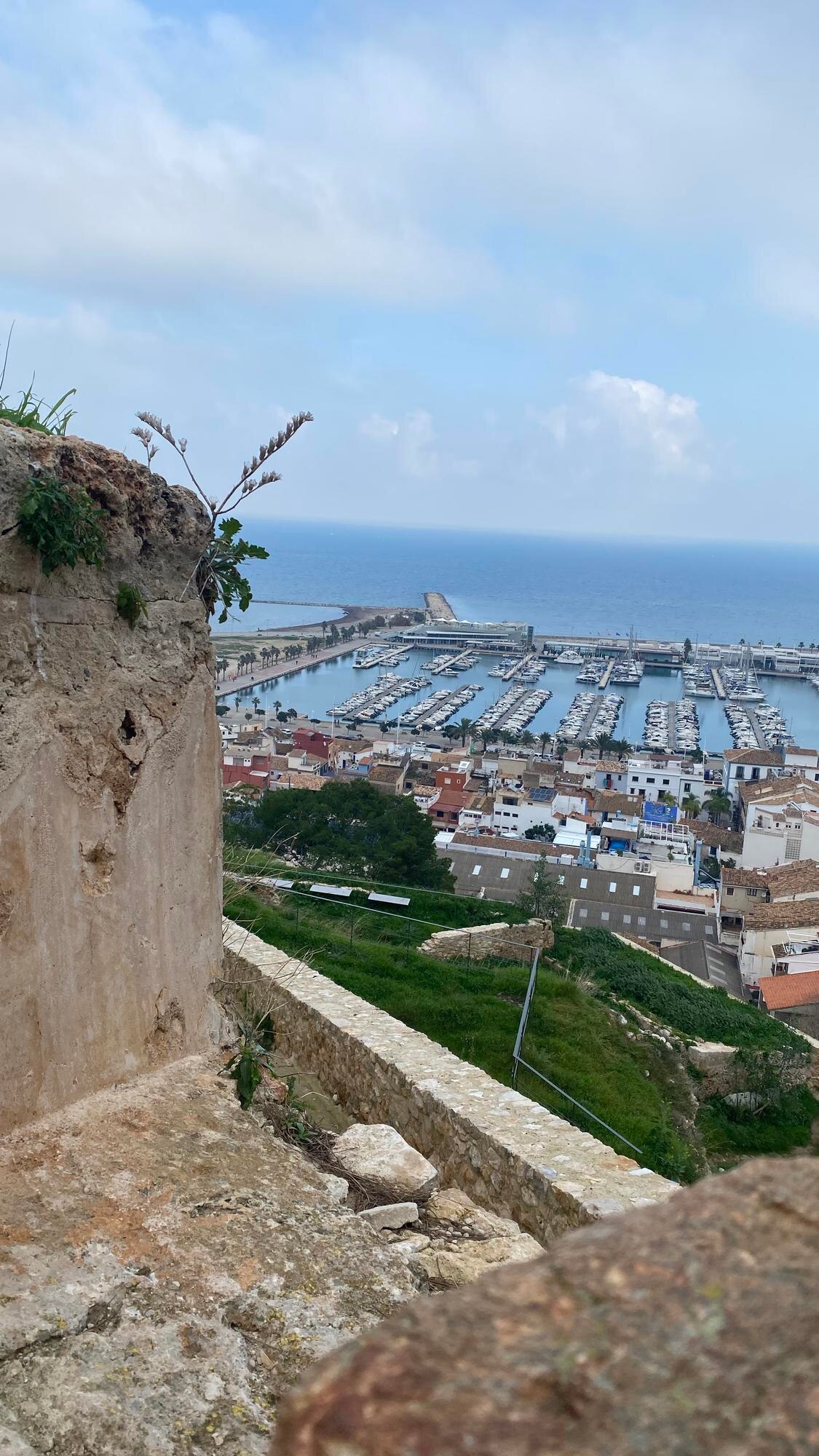
Opening times and prices checked on 21 November 2026. From November to March, the tourist board lists opening hours of 10am to 6pm, with last admission half an hour before closing. Standard admission is €3, children aged 8–16 pay €1, and students, retired visitors and pensioners pay €2. Card payment is preferred. Check notices and special opening times for public holidays. Groups should notify the museum service in advance. See the official castle listing for details.
Getting up to the castle and choosing a gentler route
The entrance is on Carrer Sant Francesc. From Plaça de la Constitució, the steps beside the town hall lead towards Carrer Hospital and Pujada al Castell. To avoid the steps on the approach, the tourist board suggests going via Carrer Loreto and Carrer Sant Narcís to Carrer Sant Francesc. This route still goes uphill. Within the castle grounds, expect cobbled sections, changes in level and steps. Wear shoes with a good grip.
Visitors with reduced mobility can apply for council authorisation to reach the Governor’s Esplanade by vehicle. The Ciutat Vigia interpretation centre has access barriers. Discuss your requirements with Dénia’s museum service on +34 966 420 260 before planning the climb.
For a route at a lower level, begin in Plaça de la Constitució, wander along Carrer Loreto and continue towards Baix la Mar and the Cervantes Esplanade. You could include the castle air-raid shelter tunnel, a free public passage linking Plaça del Consell with Ronda de les Muralles beneath the hill. Check access on the day and choose streets that suit your mobility.
From the historic centre to Baix la Mar
After coming down from the castle, leave time for Plaça de la Constitució and the central streets. A break on Carrer Loreto splits the walk before you head for the fishing quarter. If you prefer a slower day, choose fewer stops and leave time to sit down.
Baix la Mar lies between the castle walls and the harbour. Seek out Plaça de Sant Antoni and Placeta de la Creu, with their low houses and narrow streets. The quarter gives a sense of the seafaring community and the growth of port trade. Explore the squares on foot and keep residents’ doorways clear when taking photographs.
The harbour and the Sea Museum
Continue towards the Cervantes Esplanade and follow the public waterfront. Watch the boats and fishing facilities from permitted areas. What is happening around the port will depend on the day. To explore its history further, visit the Sea Museum, or Museo del Mar, in the former fish market at Explanada Cervantes, 2.
Admission is free, and the tourist board describes the building as having no architectural barriers. From October to February, it opens Monday to Saturday from 10am to 2pm and 4pm to 7pm. On Sundays and public holidays, hours are 9am to 3pm, except for the closure dates listed on its page. Allow around 30–45 minutes as a guide for the collections, and confirm opening times around special dates.
A half-day, a full day and travelling from Alicante
For a half-day, choose the castle, a short walk through the centre and Baix la Mar. With a full day, add the museum and a lunch stop. On Sundays, visit the Sea Museum before 3pm. Starting there and going up to the castle later may work better with your arrival time.
From Alicante, the rail journey uses line L1 to Benidorm and line L9 onwards to Dénia. Check connections, your return journey and service notices in the official TRAM d’Alacant planner. Allow time for the journey and change of train when deciding whether a morning visit is practical. Our guide to Alicante and the Costa Blanca without a car explains more transport options. For another day in the area, see our guide to things to do in Calpe.