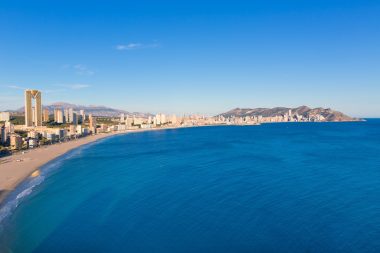

The Costa Blanca is much more than beaches. A short drive inland reveals palewashed houses, stone lanes, small squares and viewpoints over some of Alicante province’s most dramatic scenery. Not every village is entirely white—several combine white façades with stone and terracotta roofs—but all make rewarding, slow-paced stops.
This guide brings together the most beautiful villages for a road trip and shows how to combine them without rushing.
1. Altea, the classic white town by the sea
Altea is the Costa Blanca’s best-known white Mediterranean town. Its cobbled old-town streets climb towards the church of Nuestra Señora del Consuelo and its blue domes. Visit early or late in the day for gentler light, cooler lanes and quieter viewpoints.
Allow time for the galleries, viewpoints and a leisurely meal. Our full guide to things to do in Altea will help you plan the visit.
2. El Castell de Guadalest, poised above the valley
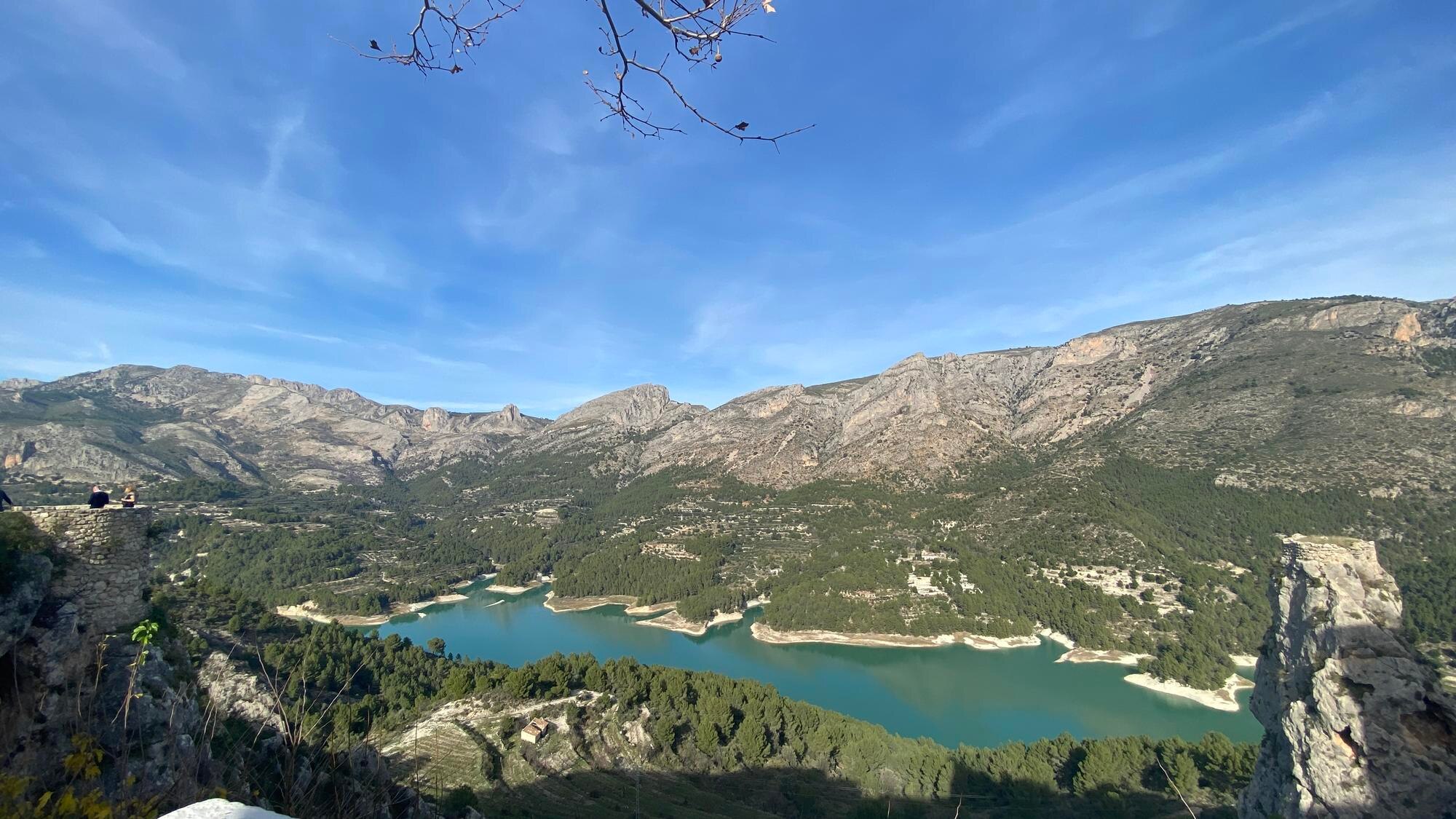
Guadalest is not a conventional all-white village. Its appeal lies in the meeting of rock, historic houses, castle remains and the striking turquoise reservoir below. Entering the old quarter through a tunnel cut into the rock is memorable in itself.
The historic centre has protected heritage status. Climb slowly, check whether San José Castle is open, and leave time for the valley views and one of the small museums.
3. Polop, fountains and views beneath Mount Ponoig
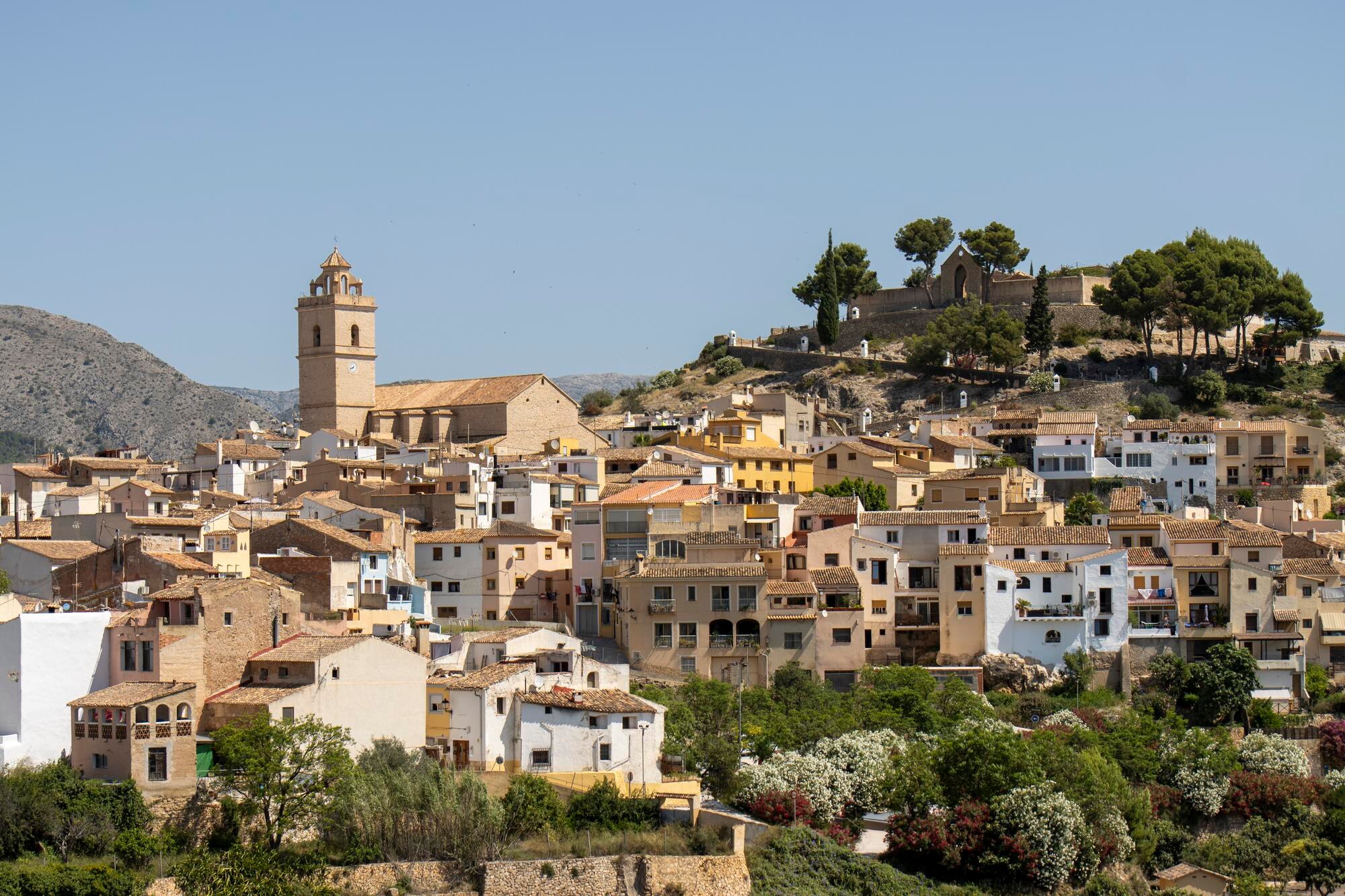
Polop is arranged around a hill topped by the remains of its castle. Walk from Plaza de los Chorros—known for its 221 water spouts—to the upper streets for views towards Ponoig and the Marina Baixa. Its manageable size makes it an easy companion to Guadalest or Altea.
4. Finestrat, an old town under Puig Campana
Finestrat has two distinct parts: a beach district and the inland historic town. Here, the old centre sits on the hillside below the unmistakable Puig Campana. Narrow lanes and pale houses create a compact, less crowded alternative to the coast.
You do not need to attempt the demanding mountain ascent. A gentle old-town walk already gives you a strong sense of the landscape.
5. Tàrbena, mountain views and Mallorcan heritage
Tàrbena lies among terraces and Mediterranean crops. It was repopulated by Mallorcan families after the expulsion of the Moriscos, leaving traces in local speech and food. White and stone houses, open views and hearty cuisine make it an excellent lunch stop.
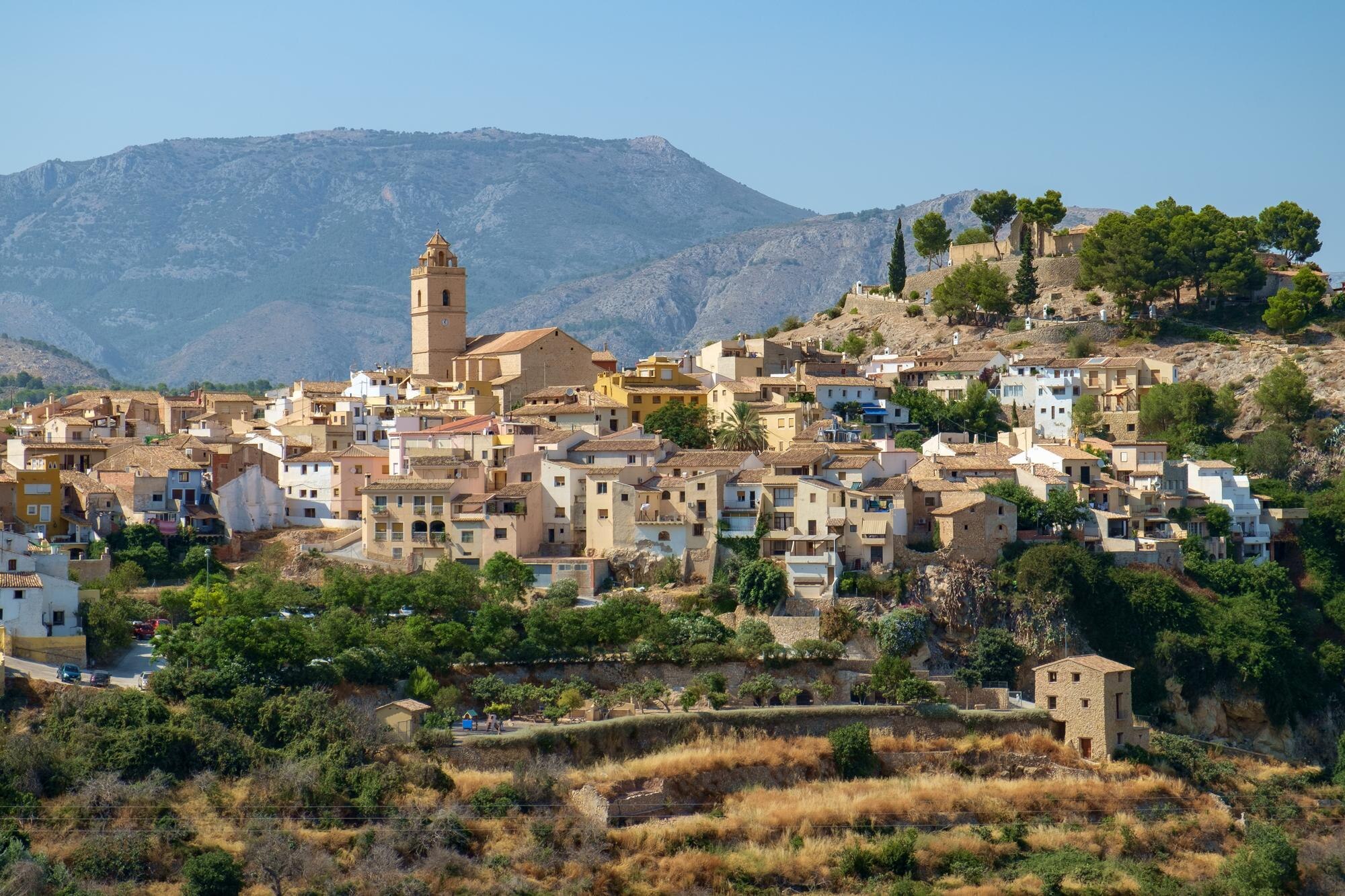
6. Benimantell and Beniardà, quiet valley balconies
Close to Guadalest, Benimantell and Beniardà offer a welcome pause from the busiest hours. Their charm comes from peaceful streets, small squares and views of the reservoir and surrounding sierras rather than a single headline attraction.
7. Bolulla, a small village among ravines and citrus groves
Bolulla suits travellers looking for somewhere genuinely quiet. Its small centre has pale façades and a rural atmosphere, surrounded by ravines, almond trees and citrus groves. The approach is winding, so take your time.
8. Sella, white houses facing the Aitana mountains
Sella tumbles down a slope opposite some of Alicante’s boldest mountains. Hikers and climbers know it well, but a simple visit is worthwhile too: wander the lanes, see Santa Ana church and enjoy the agricultural landscape.
Two easy one-day routes
Polop, Guadalest and Benimantell
Start early in Polop, reach Guadalest before midday, then stop for lunch or coffee in Benimantell. The mountain roads require care, but the distances are reasonable.
Altea, Tàrbena and Bolulla
Explore Altea first, continue inland to Tàrbena and finish in Bolulla. This route combines sea, mountain scenery and regional food. Public transport to smaller villages is limited, so read our guide to the Costa Blanca without a car before setting out.
Practical tips
- Avoid the hottest hours in summer and the busiest weekends.
- Wear comfortable shoes: expect slopes, cobbles and uneven paving.
- Do not over-plan: three villages are usually enough for one day.
- Check access and opening times: roads, castles and museums can change.
- Respect local life: use designated parking and keep noise down.
Which village should you choose?
For a first visit, Altea and Guadalest are the essentials. Polop is quieter, while Finestrat adds a spectacular mountain backdrop. Tàrbena, Benimantell, Beniardà, Bolulla and Sella reveal a slower, rural Costa Blanca.
Autumn, winter and spring are especially pleasant. Pair the drive with our guide to Alicante’s natural highlights in autumn.
Official sources for planning
Check current details through the official Comunitat Valenciana tourism pages for La Marina Baixa, El Castell de Guadalest, Polop and Finestrat.